

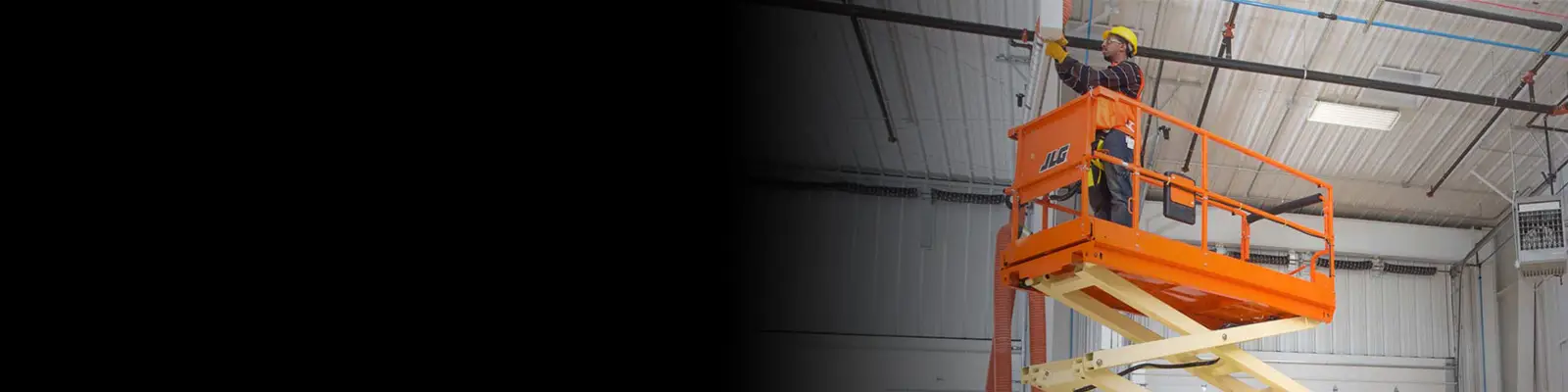

Compliant with ANSI / OSHA
100% Online - Train at Your Pace
Completion PDF Certificate
Plastic Certification Card
Corporate Bulk Pricing Available
Compliant with ANSI / OSHA

100% Online - Train at Your Pace
Completion PDF Certificate
Plastic Certification Card
Corporate Bulk Pricing Available

Certification Training
Compliant with ANSI / OSHA
100% Online - Train at Your Pace
Completion PDF Certificate
Plastic Certification Card
Corporate Bulk Pricing Available
Online Course · ANSI A92.22 / A92.24 · OSHA 1926.453
MEWP (Aerial Lift) Certification Training
A MEWP (Mobile Elevating Work Platform) is the current ANSI name for aerial lifts: boom lifts, scissor lifts, bucket trucks and similar equipment. Since 2020, ANSI A92.22 (Safe Use) and A92.24 (Training) set the training requirements that OSHA looks to for aerial lift operators.
This online course teaches you to inspect the lift and the work area, set up and operate safely, avoid tip-overs, falls and electrical contact, and know what to do if something goes wrong while you are in the air.
Who needs training? Under ANSI A92.24, it is not just operators. Occupants who ride in the platform and the supervisors who direct MEWP work need training too.
Online Certification Verification
Your certification can be verified online, any time
Your current employer, or any future employer, can confirm your MEWP certification online in seconds. They can see that it's real, current and valid, with no phone calls, no faxed copies and no lost cards.
- For your employerProof of training on file for OSHA audits, site inspections and safety records.
- For your next jobYour certification goes with you. A new employer or general contractor can check it before you step on the lift.
- Always up to dateShows your certification date and when it expires, so renewals don't slip.
Verify a CertificationEmployers: verification is free. Card or name lookup.
What You'll Learn
- MEWP groups and typesGroup A and B, Types 1, 2 and 3: what each lift is and how it moves.
- Operators, occupants and supervisorsWho needs training under ANSI A92.24 and what each role is responsible for.
- Pre-start inspectionChecking controls, guardrails, tires, hydraulics, decals and the manuals before every shift.
- Workplace inspectionSpotting drop-offs, holes, slopes, overhead obstructions and traffic before you set up.
- Stability and tip-overRated load, wind speed, slopes, outriggers and why the platform tips.
- Electrical hazardsMinimum approach distances to power lines and what to do if contact happens.
- Fall protection in the platformGuardrails, harnesses and lanyards, and when a harness is required.
- Safe operation and travelDriving, elevating and positioning without crushing or catching anyone.
- Crush and entrapment hazardsOverhead structures, pinch points and protecting yourself at the controls.
- Rescue and emergency loweringRescue plans, ground controls and getting a stranded worker down.
- FamiliarizationLearning the specific make and model before you run it.
- Shutdown and parkingLowering, securing and charging or refueling at the end of the day.
MEWP Groups and Types
| Type 1Travels only when stowed | Type 2Travels raised, driven from the chassis | Type 3Travels raised, driven from the platform | |
|---|---|---|---|
| Group APlatform stays inside the tipping lines | Push-around vertical liftMoved by hand when lowered | UncommonVertical lift driven from the chassis | Scissor liftAlso self-propelled vertical mast lifts |
| Group BPlatform can reach outside the tipping lines | Trailer-mounted boomTowed into place, then set up | UncommonTruck-mounted boom driven from the cab | Boom liftSelf-propelled articulating or telescopic |
Your certification covers all groups and types. Your employer still familiarizes you with the specific make and model you will run.
Top Causes of MEWP Injuries
- ↓FallsClimbing on guardrails, leaning out, or not tied off in a boom lift.
- ↷Tip-oversSlopes, soft ground, potholes, high wind or an overloaded platform.
- ϕElectrocutionGetting too close to overhead power lines.
- ▲Caught or crushedPinned between the platform and a beam, ceiling or structure.
Gear Check
Hard hat, with chin strap when working at height
Full-body harness, required in boom lifts
Restraint lanyard clipped to the platform anchor
Sturdy non-slip, steel-toed boots
- Operator's manual stored on the lift
- ANSI Manual of Responsibilities
- Platform anchor point
- Cones or barricades for the work zone
- Gloves and safety glasses
- Wind meter or site wind check
Who Takes This Course
- Construction crews
- Electricians and HVAC techs
- Painters and drywall crews
- Warehouse and facility maintenance
- Sign, glazing and utility workers
- Supervisors and platform occupants
For Employers
- Trained and evaluated operators
- Trained occupants and supervisors
- Familiarization on each make and model
- A written rescue plan before work starts
- A site risk assessment for every job
- Operator's manual and Manual of Responsibilities on the lift
- Pre-start, frequent and annual inspections
Training the whole crew?
Under ANSI A92.24, supervisors and the people riding in the platform need training too.
- Bulk pricing for operators, occupants and supervisors
- On-site training by our instructors
- VR training and evaluations
Course Specs
| Standards | ANSI A92.22 (Safe Use) and A92.24 (Training); OSHA 29 CFR 1926.453 and 1910.67 |
|---|---|
| Equipment | Group A and B, Types 1–3: scissor lifts, boom lifts, bucket trucks, vertical mast lifts |
| Format | 100% online, self-paced (on-site and VR training also available) |
| Time | About 90–120 minutes |
| Language | English or Spanish – switch any time |
| Test | Pass with 70% or higher. Retakes are free and unlimited. |
| Certificate | PDF certificate and test results right away when you pass, plus a copy by email |
| Plastic card | Mailed 2–5 days after we receive your photo; allow USPS up to two weeks |
| Online verification | Current and future employers can verify your certification online at any time |
| Employer form | Evaluation form for your employer's hands-on check on your lift |
| Valid for | 3 years |
From Purchase to Card
A hands-on evaluation is still required. ANSI A92.24 and OSHA expect every operator to be evaluated by a qualified person on the type of MEWP they will use. Use the included evaluation form with your employer, or ask us about on-site or VR evaluations.
Questions
How long does the course take?
About 90–120 minutes. It's self-paced, so you can take breaks and pick up where you left off.
What if I don't pass the test?
There's no charge to retake it. Return to the class and try again until you score 70% or higher.
Does one course cover scissor lifts and boom lifts?
Yes. The course covers all MEWP groups and types, including scissor lifts, boom lifts, bucket trucks and vertical mast lifts. Your employer still completes familiarization and a hands-on evaluation on the specific lift you use.
When is retraining required before 3 years?
ANSI A92.24 calls for retraining when an operator is involved in an accident or near miss, is seen operating unsafely, is assigned a different type of MEWP, or does not pass an evaluation. Familiarization is also needed on each new make and model.
Is my old aerial lift certification still valid?
Training done before 2020 was based on the older ANSI aerial lift standards. The current standards added occupant and supervisor training, rescue plans and new groups and types, and many employers and job sites now expect A92.22/A92.24 training. If your card is from before 2020, or is close to expiring, it is a good time to update it.
How do I get my plastic card?
After you pass, you're taken to our photo form. Upload a passport-style selfie and we mail your card 2–5 days after we receive it. USPS delivery can take up to two weeks.
How can my employer verify my certification?
Your current or future employer can verify your certification online at any time using our certification verification page. It shows that your certification is valid and when it expires, so there's no need to send copies of your card.
Can my crew take the course in Spanish?
Yes. The whole course and test are available in English and Spanish, and our team answers the phone in both languages at 888-674-9992.
Courses MEWP Operators Also Take
Ready to take the course?
$99 per student · Verifiable online by any employer · Questions? Call 888-674-9992 (English & Español)